The cat litter market offers more options than ever. Beyond the traditional clay that has dominated shelves for decades, cat owners now encounter tofu, crystal, pine, walnut, corn, wheat, and paper-based litters — each with distinct properties. This comparison breaks down what published sources and cat owners report about each major type across the dimensions that matter most: weight, clumping, dust, odor control, tracking, environmental impact, flushability, and cost.
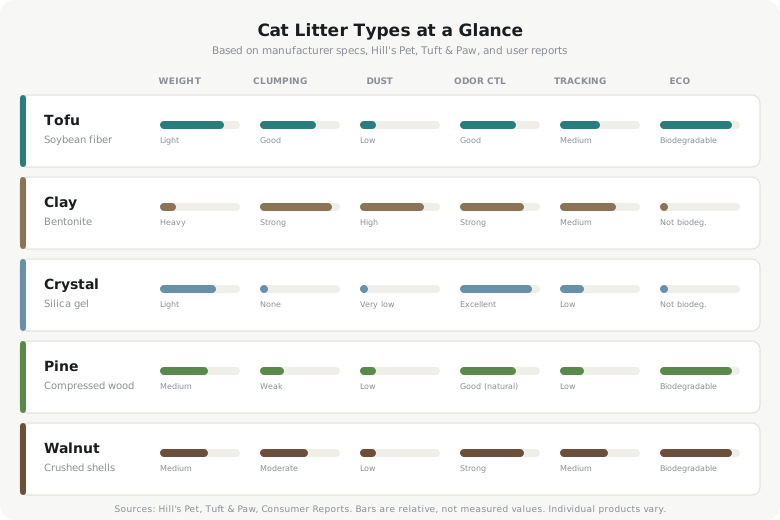
Quick Comparison Table
| Feature | Tofu | Clay (Clumping) | Crystal/Silica | Pine | Walnut |
|---|---|---|---|---|---|
| Weight | Light (6–8 lbs/bag) | Heavy (20–40 lbs/bag) | Medium (8–12 lbs/bag) | Medium (8–15 lbs/bag) | Medium (10–15 lbs/bag) |
| Clumping | Moderate — soft clumps | Strong — firm clumps | Non-clumping (absorbs) | Non-clumping (most) | Moderate to strong |
| Dust | Low | Moderate to high | Very low | Low to moderate | Low |
| Odor control | Good (single cat) | Good to excellent | Excellent | Good (fresh pine scent) | Good |
| Tracking | Moderate to high | Moderate | Low | Low (pellets) | Moderate |
| Biodegradable | Yes | No | No | Yes | Yes |
| Flushable (claimed) | Some brands claim yes | No | No | No | Some brands claim yes |
| Price range | $$ to $$$ | $ to $$ | $$ to $$$ | $ to $$ | $$ to $$$ |
Sources: Hill’s Pet, Tuft & Paw, Consumer Reports
Clay Litter (Clumping and Non-Clumping)
Clay is the incumbent. It has been the dominant cat litter material since Edward Lowe introduced Fuller’s earth for cat use in 1947, and clumping clay (sodium bentonite) arrived in the 1980s.
How it works. Sodium bentonite clay swells to approximately 15 times its dry volume when wet, forming tight, scoopable clumps. Non-clumping clay absorbs liquid but does not form clumps — the entire box is replaced periodically. Hill’s Pet describes clumping clay as the most popular litter type in the United States.
Strengths reported by users. Firm clumps that hold together during scooping. Strong odor control, especially with added baking soda or activated charcoal. Widely available at every price point. Most cats accept the fine, sandy texture without a transition period.
Drawbacks reported by users. Heavy — a standard box refill can weigh 20 to 40 pounds. Dust levels vary by brand but are frequently cited as an issue, particularly with cheaper formulations. Not biodegradable — used clay litter goes to landfill. Strip-mined, which raises environmental concerns for some cat owners. Can be harmful if ingested in significant quantities due to bentonite expansion.
Crystal/Silica Gel Litter
Crystal litter consists of porous silica gel beads or granules — the same material found in small “do not eat” desiccant packets, though in a form specifically manufactured for cat litter use.
How it works. The silica gel absorbs urine and traps it within the bead’s porous structure. It does not clump. Solid waste is scooped out, and the crystals are stirred periodically to distribute moisture evenly. A full box replacement is needed when the crystals become saturated — typically every 2 to 4 weeks for a single cat, according to Hill’s Pet.
Strengths reported by users. Excellent odor control — many cat owners describe crystal litter as the top performer in this category. Very low dust. Lightweight compared to clay. Low tracking because the beads are larger and heavier than fine clay granules. Long-lasting between full changes.
Drawbacks reported by users. Not biodegradable. Higher cost per bag. Some cats dislike the texture of the beads under their paws. Not scoopable for urine, which means urine sits in the box until the crystals absorb it. Some cat owners report a strong smell when the crystals become fully saturated and stop absorbing.
Tofu (Soybean) Litter
Tofu litter is made from okara — soybean pulp — compressed under high temperatures into pellets or granules. For a full profile of this litter type, see What Is Tofu Cat Litter?.
How it works. The soy fiber and added natural starches absorb moisture and form clumps, similar in concept to clay but with a softer resulting clump. According to Tuft & Paw, tofu litter is the fastest-growing segment among plant-based litters.
Strengths reported by users. Lightweight. Low dust. Biodegradable. Some brands claim flushability (see Can You Flush Tofu Cat Litter? for what municipalities and plumbing sources say about this). Non-toxic if small amounts are ingested during grooming, per Consumer Reports.
Drawbacks reported by users. Clumps are softer and break apart more easily than clay. Tracks moderately due to lightweight granules. Sensitive to humidity — can degrade, soften, or develop mold in storage. More expensive than basic clay. Odor control adequate for single-cat homes but sometimes reported as insufficient for multi-cat setups.
Pine Litter
Pine litter is made from kiln-dried pine wood, compressed into pellets or ground into smaller granules. The kiln-drying process removes most of the phenol compounds naturally present in pine, which can be irritating to cats.
How it works. Pine pellet litter works on an absorption-and-disintegration model: pellets absorb urine, swell, and crumble into sawdust. The sawdust sifts to the bottom of the box (especially in sifting litter boxes designed for this purpose), and the intact pellets remain on top. Most pine litter does not clump, though a few brands offer a clumping pine granule formulation. Hill’s Pet includes pine among the natural litter alternatives it describes.
Strengths reported by users. Fresh pine scent that naturally masks odors (at least initially). Biodegradable and often compostable. Low tracking — pellets are large and heavy. Affordable, especially in equine-grade pine pellet form, which is chemically identical but sold in larger bags at farm supply stores.
Drawbacks reported by users. No clumping in standard pellet form — requires a different litter box management routine. Some cats reject the large pellet texture, particularly those accustomed to fine clay. The pine scent fades within days as the litter absorbs urine. Sawdust accumulation at the bottom of the box can become messy. Not scoopable in the traditional sense.
Walnut Shell Litter
Walnut litter is made from crushed walnut shells, producing dark-brown granules with a texture somewhat similar to fine clay.
How it works. The crushed shells have natural absorption properties and form clumps when wet — tighter than tofu litter, though not as hard as bentonite clay. The dark color of walnut litter makes it easy to spot clumps visually.
Strengths reported by users. Good clumping for a plant-based litter. Biodegradable. Low dust in most formulations. Reasonable odor control. Texture is closer to clay than pellet-based alternatives, which some cats accept more readily.
Drawbacks reported by users. The dark color can stain light-colored floors, paws, and fur. Some cat owners report that the brown litter makes it harder to monitor urine color, which can be relevant for cats with urinary health issues. Moderately priced — more than basic clay, comparable to tofu. Tracking is moderate. Less widely available than clay, tofu, or pine options.
Corn and Wheat Litters
These grain-based litters share many characteristics with tofu litter and are often grouped under the same “plant-based” umbrella. For a broader look at this category, see Plant-Based Cat Litter: Types and How They Work.
Corn litter is made from ground corn kernels or corn cobs. It clumps moderately well, produces low to moderate dust, and is biodegradable. Like tofu litter, it carries a risk of mold and aflatoxin if stored improperly, since corn is particularly susceptible to Aspergillus mold. Some cat owners report a faint sweet smell from corn litter, which cats may or may not accept.
Wheat litter uses ground wheat as the base material. It clumps through the natural starches in wheat. Dust levels vary by brand. It is biodegradable and lightweight. Wheat litter is less common than corn or tofu options but occupies a similar market position.
Key Factors Compared in Detail
Weight and Handling
For cat owners who carry litter up stairs or have limited upper body strength, weight matters. Clay is the heaviest option by a wide margin. Tofu, crystal, and pine pellets fall in the middle range. Per unit of usable volume, tofu is among the lightest options — a point Tuft & Paw highlights as one of the primary reasons cat owners switch to it.
Odor Control
Odor performance depends on the number of cats, the frequency of scooping, ventilation, and diet. In general terms: crystal/silica litter is consistently rated highest for odor control in single-cat settings. Clay performs well, especially premium formulations with activated carbon. Tofu, pine, and walnut are described as adequate for one or two cats but sometimes fall short in multi-cat homes, according to Catster, which notes that multi-cat litter formulations are specifically designed for higher-traffic boxes.
Environmental Impact
Clay litter is strip-mined and not biodegradable — it accumulates in landfills indefinitely. Crystal litter is also non-biodegradable. Tofu, pine, walnut, corn, and wheat litters are all biodegradable under composting conditions, though composting used cat litter raises concerns about Toxoplasma gondii — see the flushing article for more on this pathogen.
Grand View Research market data shows the eco-friendly and plant-based litter segment growing significantly faster than traditional clay, indicating a market shift driven partly by environmental concerns.
Cost
Basic clay litter remains the cheapest option. Pine pellets (especially equine-grade) are also affordable. Crystal, tofu, and walnut litters carry premium pricing. The cost-per-month calculation is more complex than cost-per-bag because lighter litters often require less product to fill a box, and some types last longer between changes.
Choosing Between Types
Cat preference is the factor that overrides all others. A litter that scores perfectly on every objective measure is useless if the cat refuses to use it. Texture, scent, and grain size all influence feline acceptance, and individual preferences vary. Some cats transition smoothly between types; others resist any change. For what veterinarians and behaviorists describe about switching litter types, see How to Switch Your Cat to a New Litter.
Sources:
- Hill’s Pet — Types of Cat Litter and How to Choose the Right One
- Tuft & Paw — Everything You Need to Know About Tofu Cat Litter
- Consumer Reports — Should You Be Using Cat Litter Made of Tofu?
- Catster — Multi-Cat Litter vs Regular
- Grand View Research — Cat Litter Products Market
Consult a veterinarian for questions about your cat’s health and litter needs.
Sources
Frequently Asked Questions
How do cat litter weights compare across types?
Tofu litter is light at 6-8 lbs per bag, crystal or silica is medium at 8-12 lbs, and clay is the heaviest at 20-40 lbs per bag.
Which cat litter type clumps the strongest?
Clay litter forms the strongest clumps since sodium bentonite clay swells to approximately 15 times its dry volume when wet. Tofu litter clumps are softer and less rock-hard than clay.
Which litter type tracks the least?
Pine pellets track the least due to their large, heavy size. Crystal litter also has low tracking due to larger, heavier beads. Tofu litter has moderate to high tracking because of its lightweight granules.